Iceland for Couples from Reykjavik: 7 Days of Golden Circle, South Coast & Snæfellsnes — With Real Drive Times and Costs for Two
Most Iceland itineraries fail on one number: the clock.
The map makes everything look close. A waterfall here, a black beach there, a glacier lagoon at the end of the same road. Then you are four hours into a drive, the light is going, and your partner has stopped speaking to you about the playlist.
Iceland is not big. But it is long, empty, and slow. Speed limits are low. Weather decides the pace. Every photo stop adds twenty minutes. A “two-hour detour” is rarely two hours.
This guide is built around that reality. We use one base, Reykjavik, and make day trips from it. No packing the car every morning. No rushing to a new guesthouse by 6 p.m. Just a home base, a rental car, and three regions done properly: the Golden Circle, the South Coast, and the Snæfellsnes Peninsula.
To be clear about scope: this is not a full Ring Road plan. It is a seven-day, Reykjavik-based route. That choice keeps driving sane and costs predictable, and it suits couples who want to spend their time together rather than behind a windshield.
Below you will find the day-by-day route, honest drive times, a cost table for two at three budget levels, five expensive mistakes to avoid, and answers to the questions couples ask most.
The Drive-Time Mistake That Wrecks Itineraries
Here is the usual error. A couple books seven days, opens a map, and stacks sights by distance. It looks fine on paper.
What the map does not show:
- Stops are the real cost. A 90-minute drive with three stops is a four-hour outing.
- Winter shrinks your day. In deep winter, usable daylight can be only a few hours. In summer, you have the opposite problem: it never gets dark, so you overdo it.
- Wind and road conditions change plans. Closures and slow roads are routine, not rare.
- Fatigue compounds. Day four is not day one. Long driving days stacked together wear on both of you.
The fix is simple. Plan fewer places per day. Put the longest drives on days with nothing else scheduled. And leave one flexible day in the week for weather.
A note on distances. Reykjavik to the Jökulsárlón glacier lagoon is roughly 380 km. Plan on about four and a half hours each way without stops. That is a nine-hour round trip behind the wheel, which is why we treat it as its own full day, and why we say so plainly instead of pretending it fits around a lunch break.
All times below are approximate, for normal conditions. Check road.is and vedur.is each morning.
The 7-Day Route, Summarized
Day 1: Arrive and Settle Into Reykjavik
Flights from North America often land early in the morning. Do not collect the car and drive out of the airport on no sleep. Take the transfer or pick up the car after a rest.
Walk the old harbor. Eat something simple. Go to bed early.
Driving: Keflavik Airport to Reykjavik is about 45 minutes.
Day 2: The Golden Circle
The classic loop, and a good first day on the road.
Þingvellir National Park, about 45 minutes from the city. Walk the rift between two tectonic plates.
Geysir geothermal area, about an hour further. Strokkur erupts every few minutes.
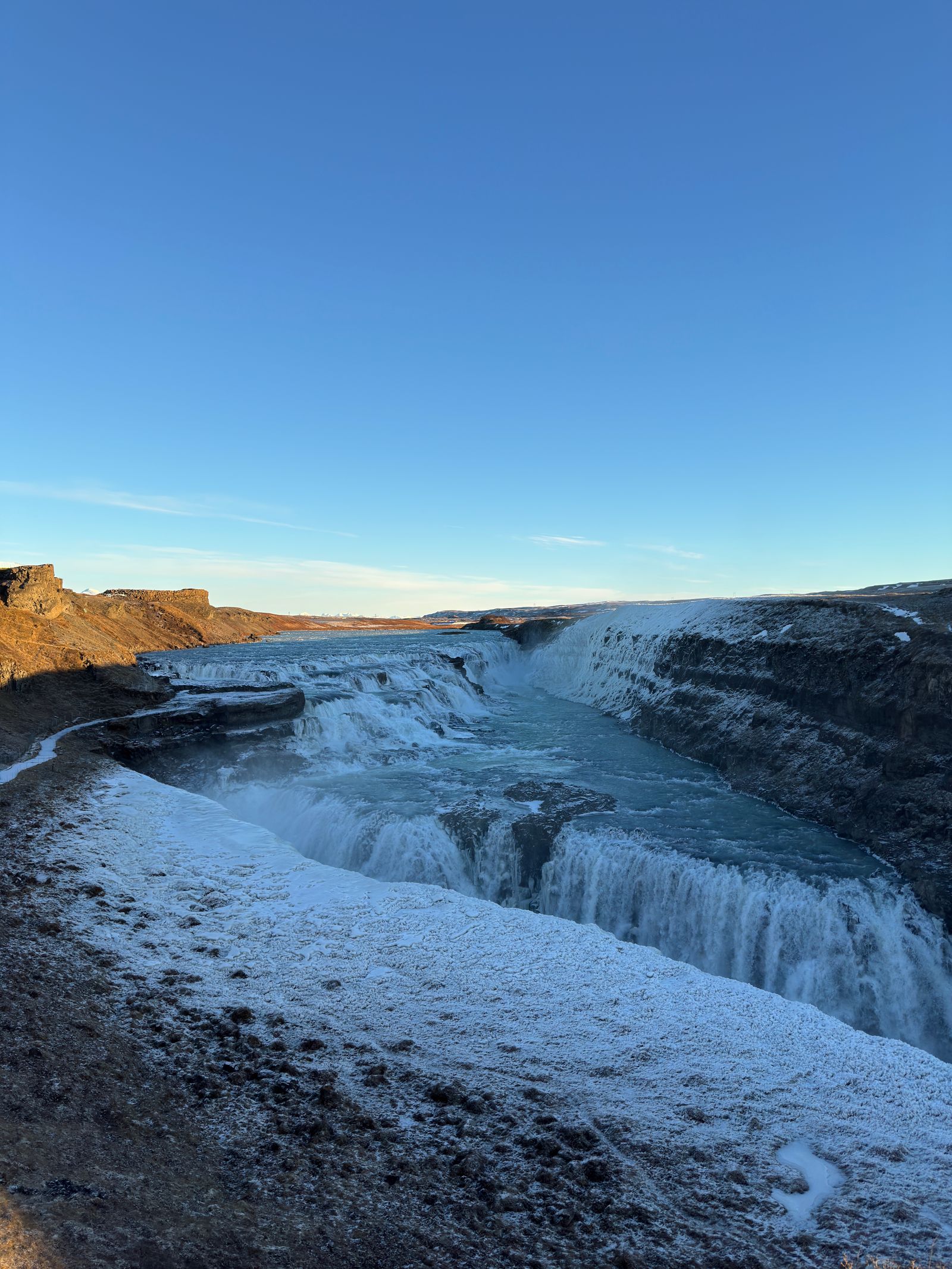
Gullfoss, a short hop from Geysir. A wide, powerful two-tier waterfall.
Allow a full day. The loop itself is roughly three and a half hours of driving without stops. With stops, meals, and slow walking, you will be out for eight or nine hours.
Couple tip: Go to Gullfoss late in the afternoon if you can. Tour buses thin out, and the light is softer.
Day 3: Snæfellsnes Peninsula
Locals call it Iceland in miniature. Lava fields, sea cliffs, fishing villages, and a glacier-topped volcano.
Búðir black church and coastline.
Arnarstapi to Hellnar coastal walk.
Djúpalónssandur beach and lava formations.
Kirkjufell mountain and waterfall near Grundarfjörður.
Kirkjufell is about two hours and fifteen minutes from Reykjavik. Doing the peninsula in a loop adds up to a long day, often nine hours or more with stops. Start early.

Day 4: A Slow Day in Reykjavik
This is the buffer day. Use it for weather, rest, or a geothermal bath.
If the forecast is bad on another day, swap. If it is fine, spend it on a long breakfast, museums, a swim, and dinner somewhere you booked ahead.
We say it from a planning standpoint: a week with no slack is a fragile week.
Day 5: South Coast, Part One
Head east along Route 1.
Seljalandsfoss, about an hour and forty-five minutes from the city. You can walk behind the falls. Bring a rain shell.
Skógafoss, a little further. A tall, simple, powerful waterfall.
Reynisfjara black sand beach near Vík, about two and a half hours from Reykjavik. Stay well back from the waterline. Sneaker waves here are dangerous and well documented.
Turn around at Vík and drive back. You will cover roughly five hours of driving, plus stops.

Day 6: Jökulsárlón, the Long Day
This is the big one, and the reason we are honest about drive times.
Jökulsárlón is the glacier lagoon with floating icebergs. It is stunning. It is also about four and a half hours from Reykjavik each way.
You have two sensible options:
- Drive it as a single, very long day. Leave early. Accept that you will be driving nine hours or more, with a short visit at the lagoon. Do this only in good weather and good daylight.
- Split it with a night near the coast. Stay one night in or near Vík or further east, and break the drive in two. This costs more, but it turns an endurance test into a trip.
Either way, do not schedule anything else on this day. Not a second waterfall. Not a dinner reservation back in the city.

Day 7: Last Morning and Departure
Keep it easy. Return the car on time. Leave a margin for the airport transfer, since check-in and security at Keflavik take longer than people expect.
What a Week Costs for Two
These are total costs for two people for seven days. They are the figures from our full guide.
| Budget level | Total for two (7 days) | Approx. per day for two | What it generally means |
|---|---|---|---|
| Lean | $1,200 | About $170 | Basic lodging, groceries for most meals, a compact car, free sights, few paid activities. |
| Comfortable | $2,000 | About $285 | Better lodging, a mix of groceries and restaurant meals, a sturdier car, one or two paid experiences. |
| Splurge | $3,200 | About $455 | Nicer rooms or an overnight on the South Coast, regular restaurant dinners, a larger vehicle, several paid experiences. |
Note: this table is a summary of the three levels, not a line-by-line audit. The full category-by-category breakdown of each budget level — where the money goes on lodging, car, food and activities, day by day — is in the complete guide.
Per-day figures are simple averages of the totals. Real spending is lumpy: car rental and lodging are the big blocks, while nature itself is mostly free.
Two things move the number more than anything else:
- Season. Summer prices for cars and rooms are higher. Shoulder and winter months are usually cheaper, but you trade daylight and road certainty for savings.
- Whether you split the Jökulsárlón day. An extra night adds cost, but it can also save you a day of exhaustion.
The full guide breaks down each tier so you can see where the money goes.
5 Expensive Mistakes in Iceland
1. Trusting the Map Instead of the Clock
We covered this already, but it is the costliest mistake. It leads to rushed days, skipped sights you paid to be near, and a fuel bill for hours of extra driving. Plan by hours, not kilometers. Count stops.
2. Booking the Wrong Car, or Skipping the Right Insurance
Iceland has road hazards most visitors have never seen: gravel chips, sand and ash storms, strong gusts that can take a car door off. Standard insurance often does not cover these, and rental companies offer extra coverage for them.
Also, F-roads (the interior highland tracks) are for properly equipped 4x4 vehicles, and many rental agreements ban other cars from them. This itinerary does not need F-roads. Do not drive onto one to “save time.”
Read the rental terms before you pay. Compare what is included, not just the daily rate.
3. Locking Everything In With No Weather Slack
Non-refundable tours and rigid reservations feel organized. In Iceland they can be expensive. Wind or snow can close a road for a day.
Book your lodging early, since good places fill up. But keep the activities flexible, and keep that buffer day in your week.
4. Eating Every Meal Out
Restaurant meals in Iceland are pricey. For two people, the difference between eating out three times a day and mixing in groceries is large over seven days.
Supermarkets are easy to find in and around Reykjavik. Pack lunches for driving days. Save the restaurant meals for the nights that matter, like your Day 4 dinner. Tap water is safe and good, so do not buy bottled water.
5. Paying for What You Can Do for Free
Much of the best of Iceland costs nothing: Þingvellir walks, waterfalls, black sand beaches, coastal trails. Paid add-ons can be great, but stacking them adds up quickly.
Pick one or two experiences you will truly remember, and let the landscape do the rest. And watch out for parking: some popular sites now charge for it. Pay on the spot to avoid fines later.
FAQ
Is seven days enough from a Reykjavik base?
Yes, for what we cover here. Seven days gives you three regions, one long lagoon day, and one buffer day. It does not give you the whole island. If you want the full ring, that is a different, longer trip.
Do we need a 4x4?
Not for this route in normal summer conditions, since the main roads are paved. In winter, a more capable vehicle can be worth it for peace of mind, but it is a judgment call that depends on the forecast and your comfort driving in snow. Check current road conditions before you set out.
Can we really do Jökulsárlón from Reykjavik in a day?
You can, but it is a very long day: roughly nine hours of driving, plus time at the lagoon. Whether it is worth it depends on the season, daylight, and your energy. If it sounds like too much, split it with a night on the South Coast.
How much should we budget for two?
Our guide uses three totals for a seven-day trip for two: $1,200, $2,000, and $3,200. Your number will depend on the season, the car you choose, and how often you eat out. The guide shows what each level includes.
Plan the Trip Together, Not Against the Clock
The point of a Reykjavik base is not to see less. It is to see each place without the dread of the next long drive.
If you want the full version of this plan, our Iceland guide includes the day-by-day route, drive times for each leg, the three cost breakdowns for two, and the practical notes we could not fit in a blog post. It is a PDF you can keep on your phone and print if you like.
You can find it in our shop on Etsy: Iceland guide for couples. If this article already gave you what you need, that is fine too. Safe travels.
Photo credits: Matteo Sassola, David Stanfield, Oliver Wagenblatt and Thibaut Tattevin / Pexels


Comments
Post a Comment